galry.art
by Art Patron
The Law Has Always Allowed This. No One Ever Showed You How.
May 31, 2026 | Moka, Esq. | 20 minutes
Until now, you were never placed in a position to move art through the world.
This page shows you something unusual:
You can be granted a license that allows you to lawfully move fine art worldwide — without owning the art, managing production and logistics, or having any background in art, law, or copyright.
Here, you will discover a position that has quietly existed all along.
This is not a platform or a job.
It is a legal arrangement.
Within that arrangement, each act carried out under the license gives rise to a defined outcome.
1. The Problem No One Addressed
There is more fine art in the world than most people will ever encounter.
You can find it instantly, view fragments of it, or pass it in seconds—
on a screen or in a gallery.
But most of it never travels far.
It remains where it is placed—
within collections, archives, galleries, or limited points of display.
A work of art may exist. It may be complete, preserved—
even documented.
And still, it does not circulate.
What’s missing is not visibility—
but movement.
And movement is what determines whether art remains contained—
or becomes part of the world.
At first glance, it appears that art is limited by where it is kept.
A painting on a wall inside a gallery or museum.
A file on a server.
A poster or an art book.
These are forms in which a work of art can appear.
But a work of art, in legal terms, is something else entirely.
When art is created, it is intellectual property—
recognized and automatically protected under copyright law.
2. What Copyright Actually Controls
Copyright protection is not limited to the existence of art itself.
It applies to what can be done with it:
Who can make copies of it
Who can distribute it
Who can make it available to others
By default, those rights belong to the copyright owner.
Which means the movement of art from one person to another, across any form, is not simply a matter of access.
It is a matter of permission—
from the copyright owner.
This is why, until now, fine art did not move through its viewers.
Not because people lacked interest—
but because they were never included in the structure that allows movement to occur.
Interestingly, copyright law does not attach itself to the canvas or the file.
It attaches to the work of art as an intangible creation.
That distinction matters.
A work of art, in legal terms, is not just a physical object.
For example:
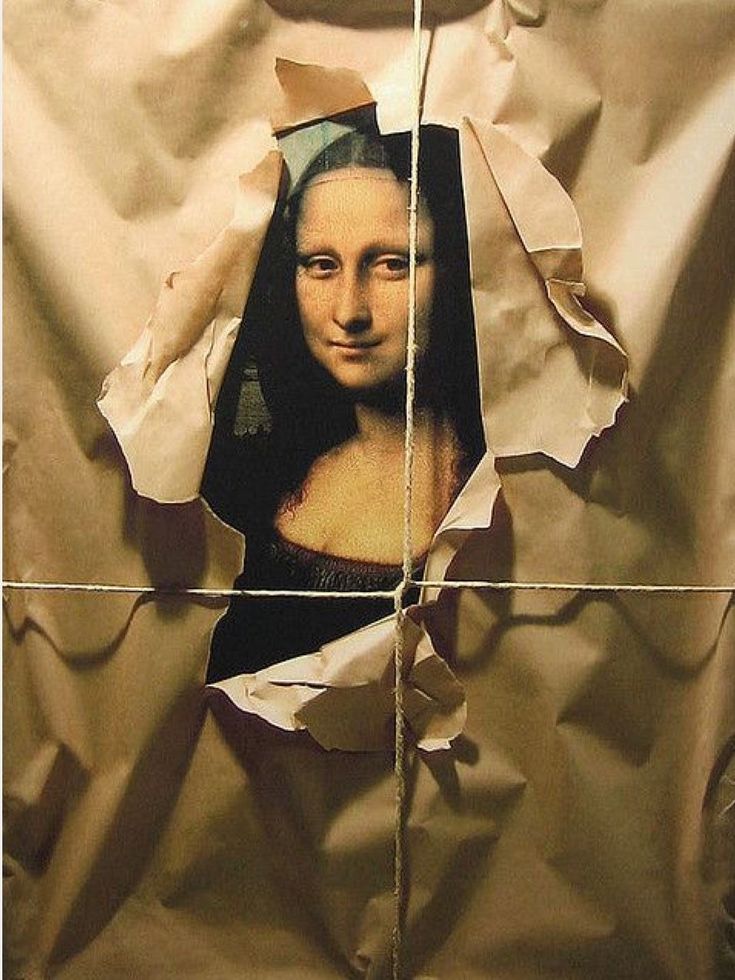
The Mona Lisa is not just an art piece at the Louvre.
It exists in the minds of people familiar with it, even if they have never seen the original.
What the law governs is not just the object or its medium—
but what may be done with the intellectual property, and how it may move.
Copyright law not only governs protection, but also the lawful structuring of how intellectual property may circulate.
A copyright owner is not limited to exercising those rights exclusively or personally.
They can grant specific rights to others under license—
a formal legal mechanism with defined conditions.
And when those rights are granted properly, the person receiving them is no longer outside the process.
They become part of it.
Not as the creator or an observer—
but as someone lawfully permitted to act in relation to the licensed material.
They can put art in a new state of transmission.
The question is no longer:
“Where is the art located?”
But:
“Who is permitted to carry it forward?”
3. How the Law Extends Movement
If the movement of art depends on permission,
and the law allows that permission to be granted—
then it is not a legal limitation.
It is a structural one.
Permission has traditionally been organized through narrow pathways:
publishers,
galleries,
collectors,
platforms.
Each pathway is defined.
Each role is limited.
This is why, in the past, art did not move through its viewers.
Individuals were never part of that structure.
So even though the law allowed movement,
the structure did not.
And as a result, art remained where it was placed—
not because it had to,
but because no mechanism included the public in its movement.
Fine art is an intangible creation—
the subject in which rights exist.
That changes how it behaves.
A physical object can only be handed over once.
When it moves, the original holder no longer has it.
Intellectual property does not function this way.
When rights in it are granted, nothing is diminished.
Nothing leaves the source.
Nothing is used up.
The same work of art remains fully capable of giving rise to further acts—
again and again.
This is what allows movement to scale.
And it is the same principle by which software, media, and digital works are distributed globally under license.
Because what moves first is not a physical object, but rights.
And those rights can be granted, exercised, and recognized without depletion.
4. The Legal Solution That Was Always There
Up to this point, the limitation may appear to be practical.
A matter of:
distribution,
access,
technology.
But it is none of these.
The limitation was structural—
and the solution is legal.
The law that governs how creative works move has existed for a long time.
It is the law of publishing.
Publishing is an act defined by the law itself.
It is the act of making creative works, including artistic and literary works, available to the public under lawful authority.
And that authority comes from rights—
granted under license, over the master copy.
Once those rights are granted, publishing becomes possible through lawful position—
not through ownership or control of infrastructure.
A master copy is the source in which rights subsist.
It is not a physical, tangible object like a paper, a file, or a book.
It is an intangible, intellectual property that the law recognizes as the subject of copyright and licensing.
What changes here is not the law itself—
but how it is applied.
Instead of limiting publishing to predefined entities,
the framework extends that position to individuals by giving them the right to publish.
You are not being given access to a platform.
You are being granted the legal ability to act as a disseminator of fine art—
within a defined legal arrangement.
This is the shift.

5. How Fine Art Moves Through Publishing
Publishing and fine art have not traditionally been used together.
Fine art has been understood to move in only one of two ways:
as physical objects—paintings, drawings, originals—circulating through galleries and collectors,
or as digital images displayed across screens.
That is the limit most people recognize.
But the arrangement that you are being introduced to here operates differently.
The question is not how to display art, but how to lawfully move it at scale.
For that, the relevant system is not technology, but publishing.
Technology may display images.
But publishing is what creates legally recognized acts of dissemination.
And crucially, publishing allows those rights to be granted onward.
Art is not moved here as an object, and not merely as an image.
It is made to move through publishing as defined by the law.
For that to happen, one condition must be met:
Fine art must exist in a form that publishing can operate on.
That form is the art book.
Individual artworks are compiled into a master copy of an art book.
In this form, a curation of fine art becomes legally capable of being offered and disseminated by individuals, under license.
Once that happens, dissemination through publishing becomes a matter of right.
Historically, the position of publisher was closely tied to:
- institutional presses,
- commercial publishing houses,
- industrial infrastructure,
- and centralized or state-controlled systems of publication.
The Private Imprint, however, separates the publishing position from those institutional requirements.
As a result, the ordinary private person may lawfully exercise publishing rights through license without becoming a publishing institution.
6. The New Arrangement That Makes It Possible
To allow fine art to move through individuals,
the new arrangement must do three things at once:
It must define the legal relationship.
It must grant the necessary rights.
It must account for the operational process.
This is built on three elements:
a contract,
a license,
and a designated agent.
The contract establishes the legal foundation,
and it defines how the arrangement operates.
The license is granted separately by the copyright owner,
and it provides the rights required to disseminate the art.
Alongside these, a designated company is already in place as your authorized agent within the arrangement.
Through the contract, the company gets authorized by you in advance to carry out the operational parts:
- handling production
- processing payments
- managing distribution
This authorization exists before you act under your license.
The company fulfills these responsibilities on your behalf,
so you do not personally have to.
Each element serves a distinct role.
Together, they form a complete and lawful arrangement.
This is the Private Imprint — a publication arrangement that allows you to move art by holding the necessary rights.
This leads to a precise outcome:
Publishing rights are granted to you under the license.
The underlying operational acts are carried out for you by your authorized agent (the pre-existing company),
which acts solely on your behalf and is not the publisher.
The law recognizes you, and you alone, as the private publisher.
This is because the company does not hold the publishing license; you do.
And you don’t transfer your license to the company or to anyone else.
You only authorize the company to act on your behalf as your agent.
This is what makes the arrangement function.
This is how the dissemination of fine art becomes possible without requiring infrastructure of your own.
You are not required to create fine art yourself.
You are not required to set up infrastructure or register companies.
You are not even required to personally manage production, payments, or distribution.
Publishing does not depend on performing every step directly.
It depends on being lawfully positioned within an arrangement that accounts for those steps.
The principle is simple:
This arrangement creates a position.
And that position carries a defined economic effect.
When a Completed Publication Activity occurs, the publisher becomes entitled to compensation.
The amount defined by the License Agreement for each such activity is USD $200.00 (two hundred United States dollars), or its equivalent in another currency, subject to applicable taxes, deductions, banking charges, and the governing documents.
The conditions under which compensation arises,
and how amounts are processed and disbursed—
are defined within the framework itself.
It follows directly from the arrangement already in place:
- the rights are granted
- the act is performed
- the process is fulfilled by the authorized agent
And the outcome is accounted for.
7. A Position That Has Always Existed in Law
What has been described above in this document is not a new theory, a workaround, or a reinterpretation of ownership.
It is a lawful position arising from the ordinary use of copyright, contract, agency, and publishing rights.
The framework arranges existing rights into a form capable of being exercised remotely.
Within that arrangement, you may participate in the worldwide movement of fine art in your private, individual capacity:
- without possessing the original works of art,
- without operating production infrastructure,
- and without belonging to the traditional publishing industry.
Nothing described here depends on status, credentials, artistic background, or institutional access.
It is a position that has existed quietly within the law for a long time.
This page did not invent it. It only showed it to you.

The arrangement operates in the following manner:
Art is compiled into a master copy of an art book.
Publishing rights in that master copy are granted to you under license.
You publish as a licensed individual, remotely.
Through that act, fine art enters lawful circulation.
What moves is not the original artwork itself, but its embodied form, such as an art book or a poster.
You are not required to personally handle a single tangible article produced and delivered on your behalf by your authorized agent.
Yet the law treats the entire act of publication as your own.
This manner of circulation is not improvised.
It is prescribed by the copyright owner.
The license does not merely grant permission.
It specifies the manner in which that permission is to be exercised.
This page explained the legal position.
Proceed to the next page, which explains the prescribed manner in which publication takes place using the Private Imprint.

About the Author
Moka is the lawyer responsible for the legal administration of the Private Imprint Arrangement. The legal arrangement was developed to enable copyright owners to license publication rights directly to individuals. Acting on behalf of participating copyright owners, Moka administers the licensing process and oversees the legal framework through which publication rights are granted and exercised in connection with the works made available through galry.art and galry.net.